
Storm Hags - Helen Woolston from 7th - 17th July 2025
KNOCKvologan - and the surrounding Tireragan nature reserve - is a landscape I had the pleasure of getting to know prior to doing an artist residency there. I had come to give a hand to Tireragan Trust, during their volunteer programme in 2023. Sinking deep into the muddy bog while we created dams in ditches to re-wet the landscape was a visceral and unforgettable experience. I eagerly returned for more, in spring 2024 and 2025.
So when I arranged with Miek and Rutger to come as an artist-in-residence, I was excited to meet the landscape again, in a new context. The baseline acquaintance I had already developed with the place felt like a solid grounding and springboard to my residency, but the artist-in-residence context allowed me to dig a little deeper and from a different angle.
I went there to work on my project Storm Hags, exploring a sense of rising energy from the land itself and from within ourselves, an energy eager for a change or rupture of injustices.
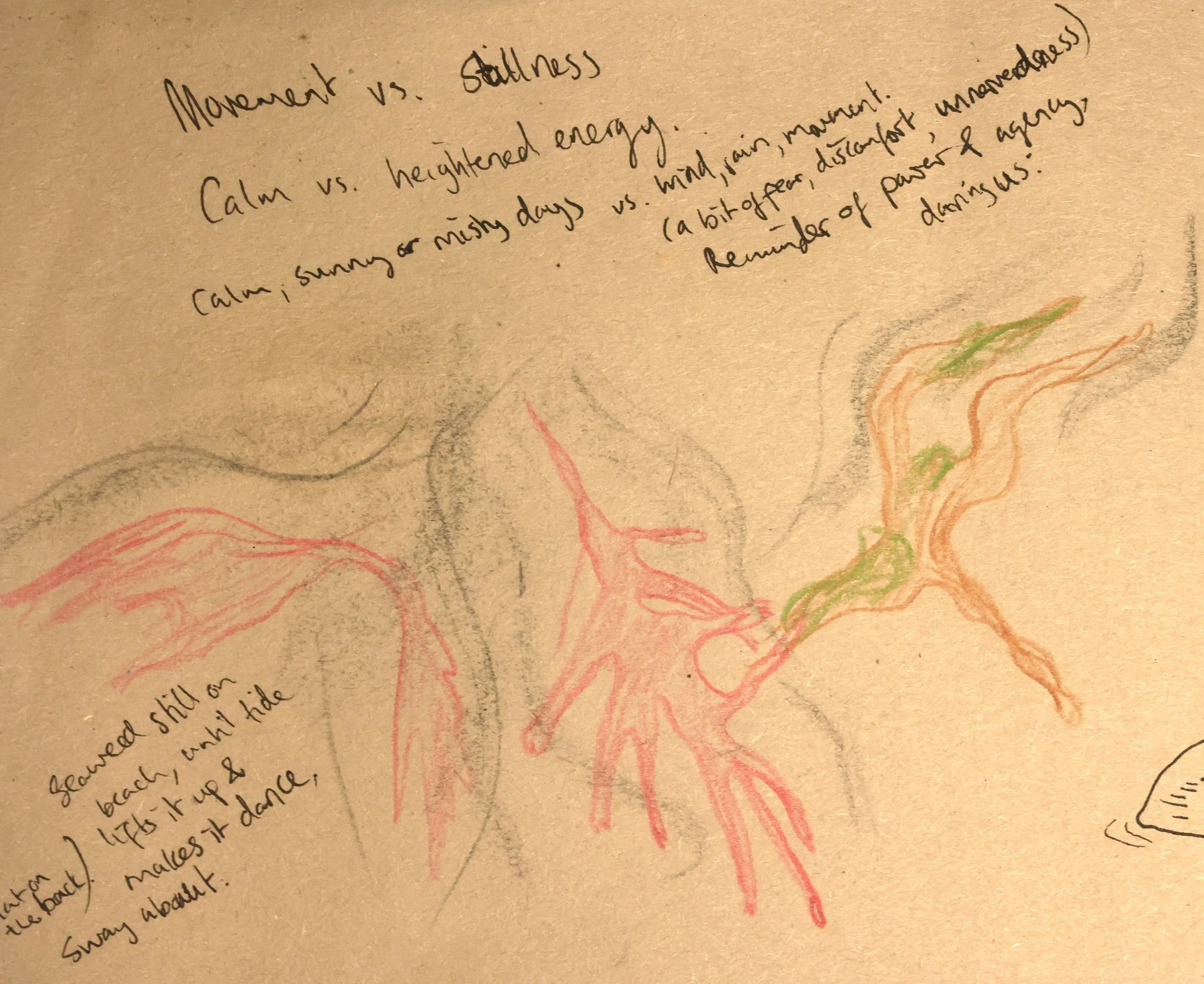
Living just north of Mull, on the Morvern Peninsula, I find a lot of inspiration in elemental forces - wild weather, battering storms, water and its effect on shaping the landscape (and shaping those who live here). This led me to think about the Gaelic character of the Cailleach, creator of the landscape and also bringer of the storms. And the role of mythology in shaping our relationship to the places we inhabit: the importance of a sense of sacredness towards landscape and elements, and how forgetting this sacredness may be intrinsically linked to biodiversity loss.
Some weeks before coming to KNOCKvologan for the residency, I had met up with Miek and Judy, her neighbour and fellow Tireragan Trustee. When I mentioned the topic of my project, I was struck by Judy’s eyes lighting up. She told me that a Cailleach Bheur, a giantess, had once, a long time ago, lived nearby her, on the isle of Erraid - and that she knew where the remains of her house were.
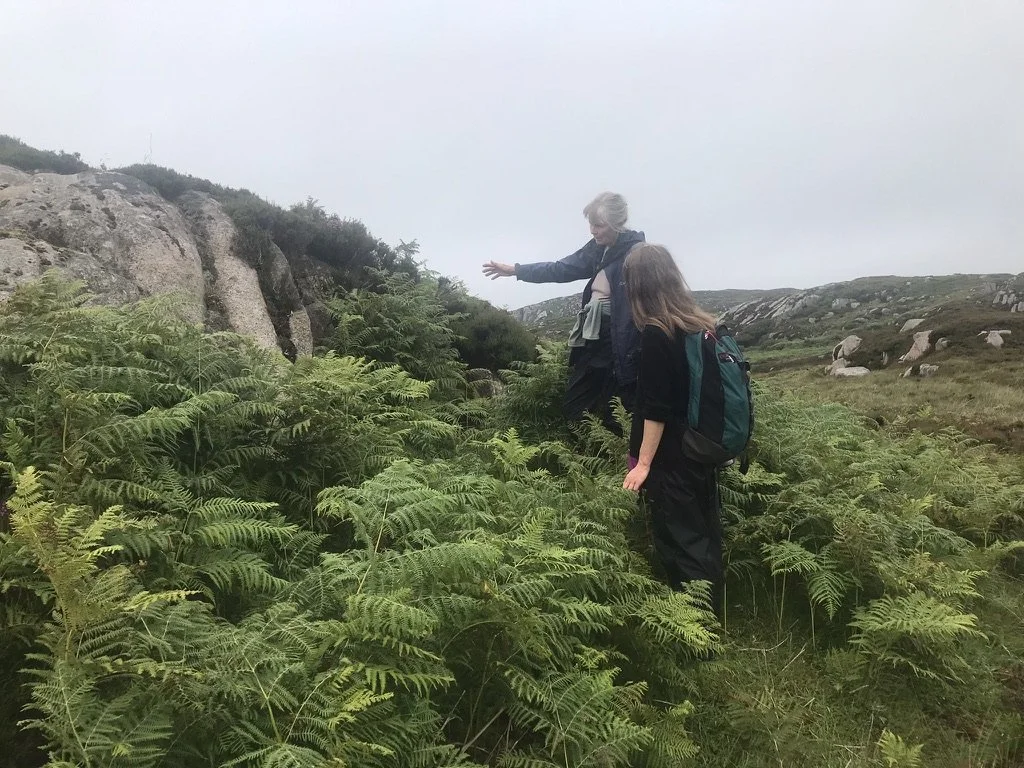
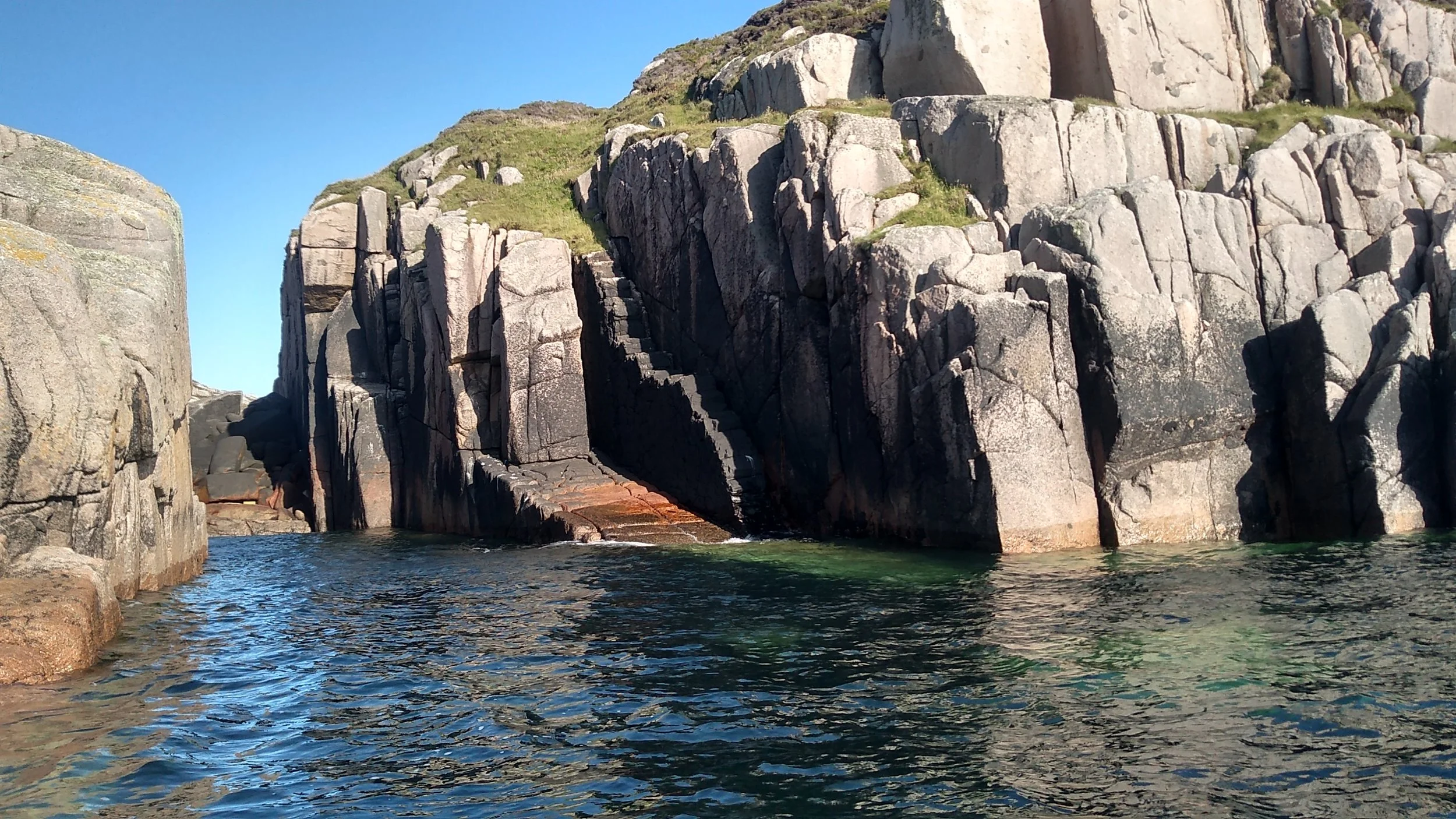
Judy and Miek took me on an exploration of the wild, rugged far side of Erraid, to the Cailleach's house, to where she would have raged and shouted from the top of the cliffs, and to other incredible rock formations, steeped in local folktales. Judy pointed out the sgeirs, one of which was quite certainly a huge sleeping female figure. Another day Rutger and Miek arranged a boat tour of the sea encircling Erraid, and the nearby razor-sharp sgeirs. The cold heaving soup of waves chugged around us, a contrast to the calm afternoon we had departed from just a short distance away.
I was keen to translate inspiration into practical work and explore the crossover between animation, puppetry and masks, mediums which can contort the familiar and represent perspectives outwith the day-to-day human lived experience. However, during my residency I found there was so much to take in that simply observing, note-taking, walking and talking with Miek, Rutger and Judy was completely fulfilling in the time I had. And I left with a notebook full of thoughts and sketches, and with my soul and my creative brain invigorated from the much needed time and space for meandering, pondering and discussing.
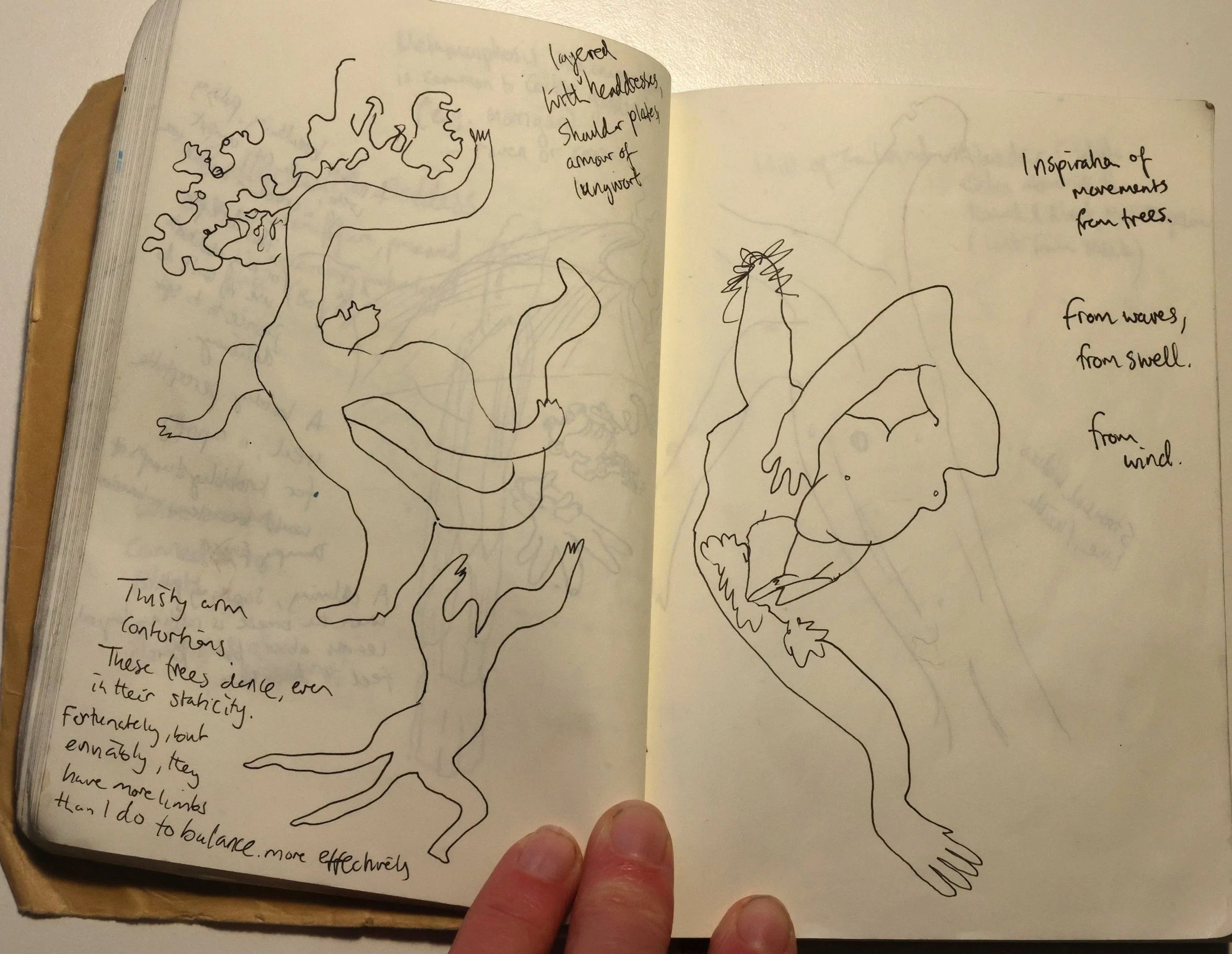
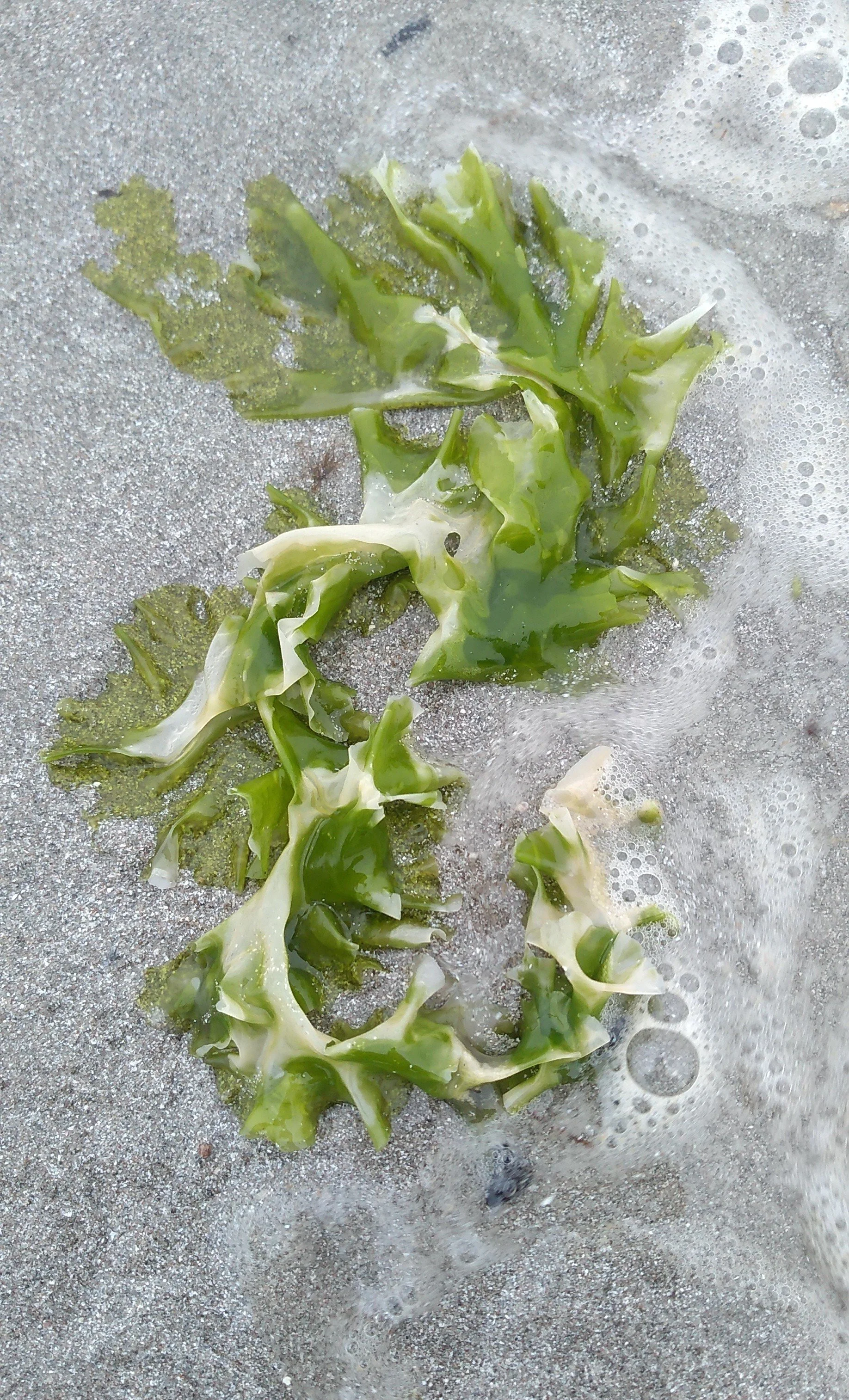
As an animator, I am drawn to movement as a tool of expression. During my walks I was looking for movement and choreographies in the landscape, even if the movement was hard to perceive within a human’s perception of time. I saw the twisted branches of old gnarled oak trees as writhing torsos and twisted dancing arms. Entwined hazel limbs seemed to reach out to me, inviting me to move with them. I spent a therapeutic full moon night camped at Traigh Geal where I was mesmerised by the rhythmic swaying of kelp as the tide crept in and out.
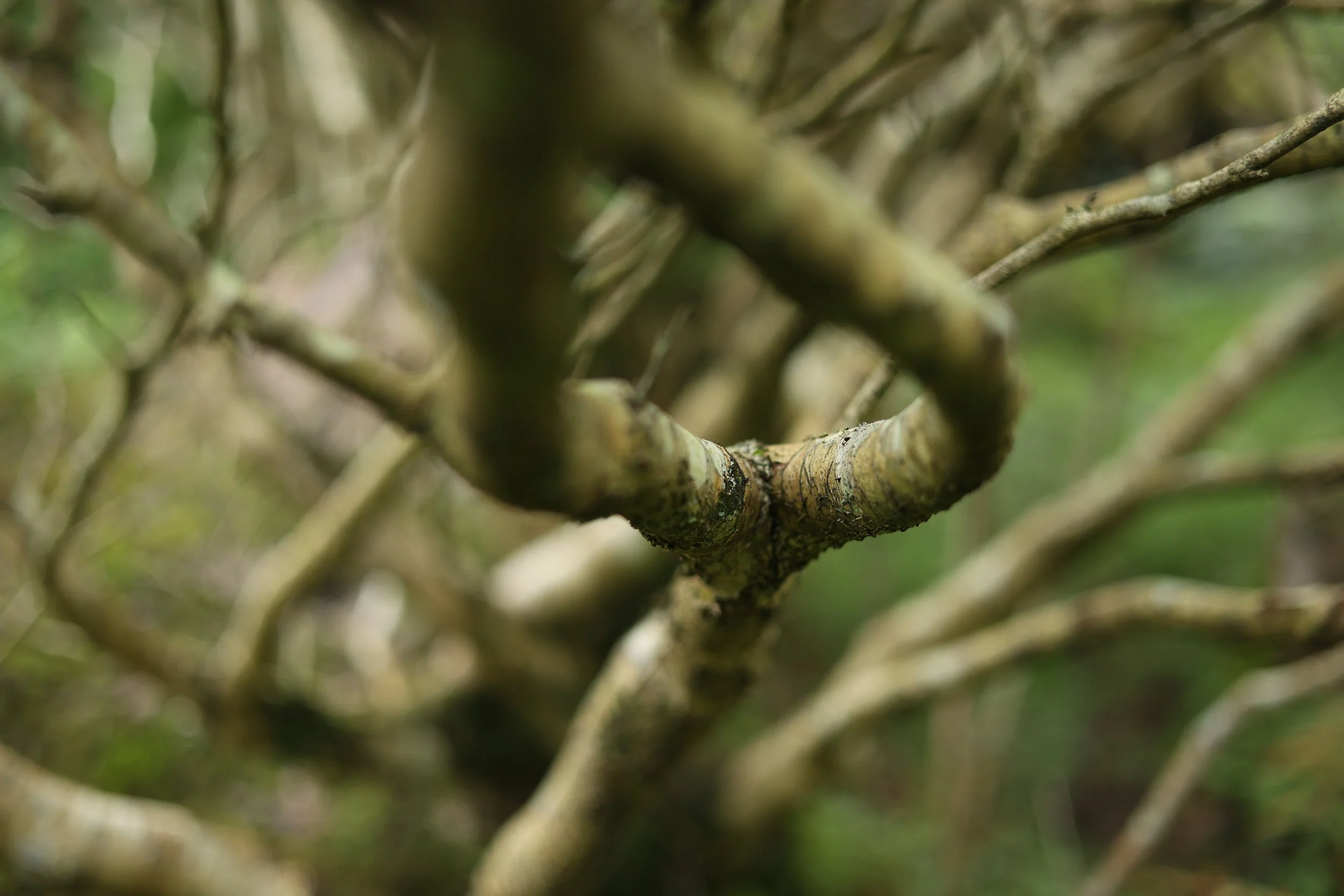
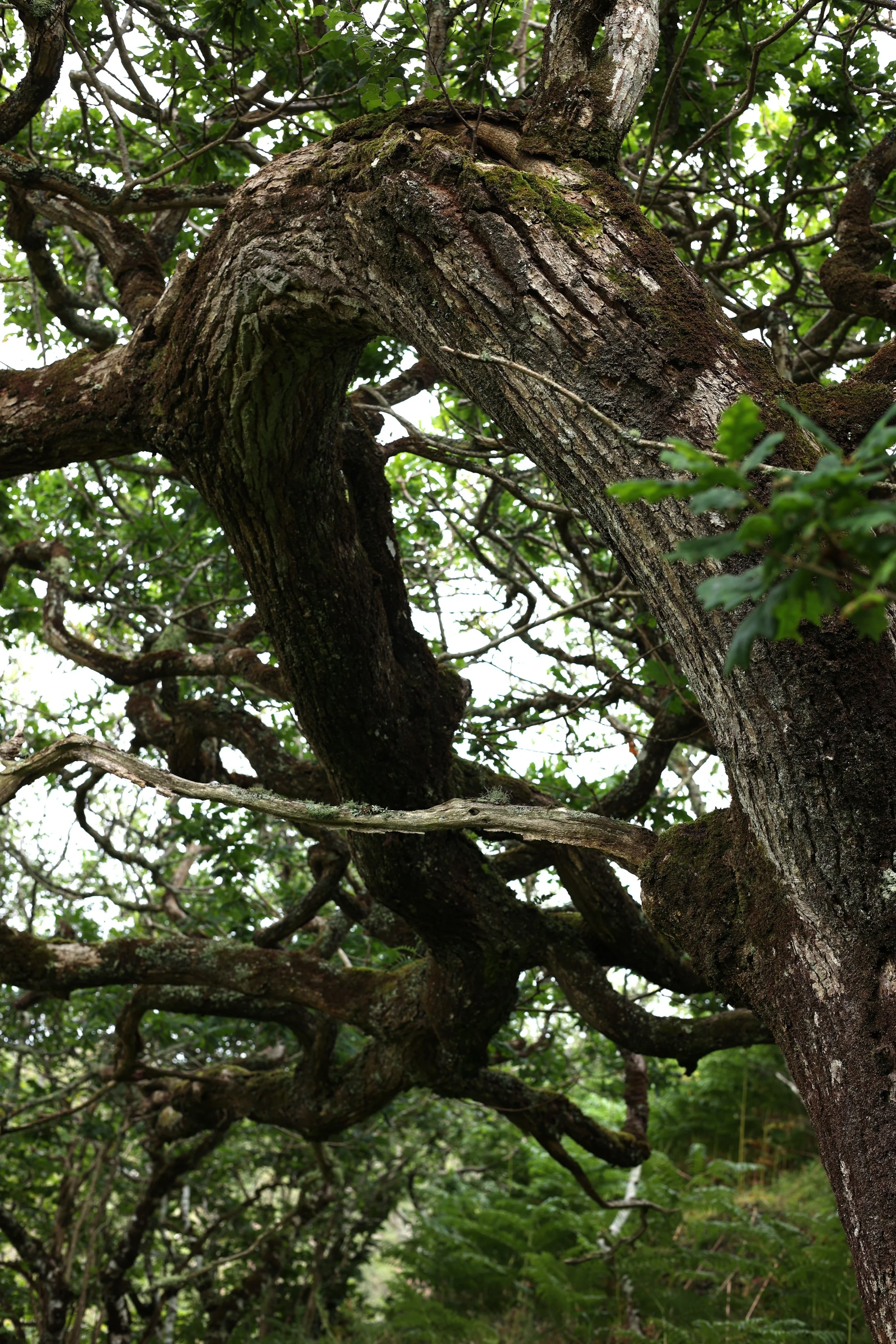
Talks with Miek and Rutger helped me to consider how I might structure these ideas into a piece of work - whether that could take the shape of animation, film, performance, or the option of rejecting formal structures of finished work and instead make an ever-evolving piece which can be fed by many sources and inputs, such as participative ritual in communities. We discussed how the choreography around us could have connotations of writhing hag energy and how that ripples in the global context: the historical suppression of such energy within many aspects of society, what the implications of that suppression may be, and methods of resistance.
They provided me with a great quantity of book suggestions, inspirational resources and yet more suggestions of places it was important to get to know in the area.
I left realising that there was so much more to discover and try to understand of the area - impossible in a few days, maybe impossible also within a lifetime. I look forward to the next time I will sink into the bogs of Tireragan.