
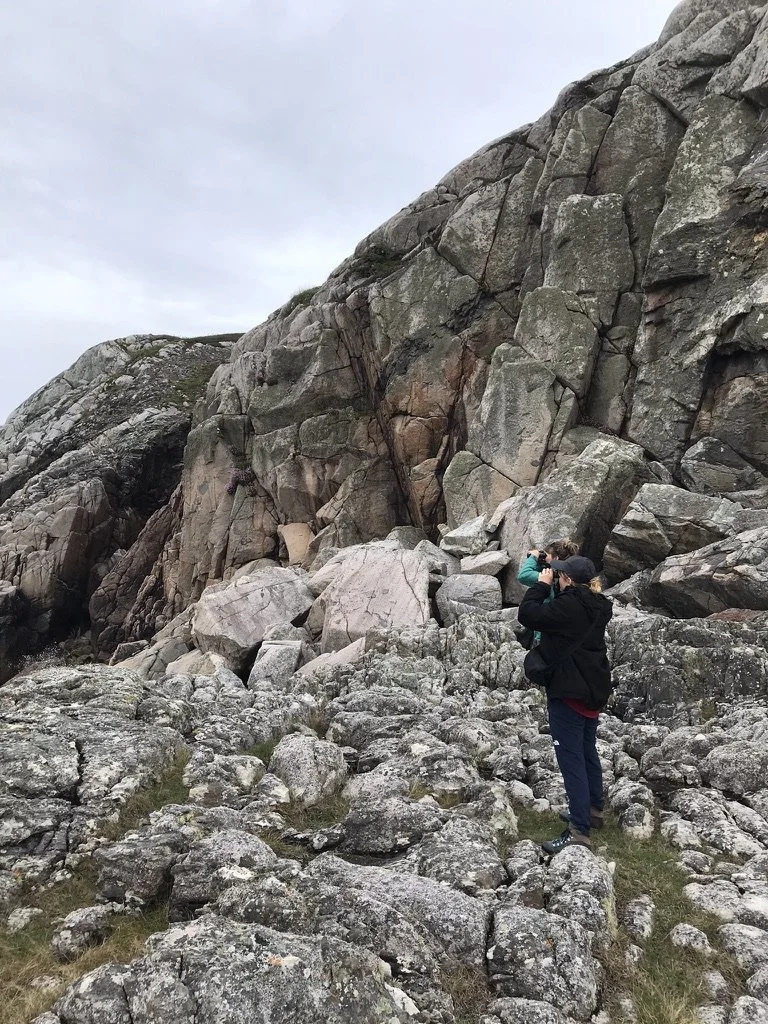
In May 2026, we – Anoek Nuyens and Rebekka de Wit – spent a week in Knockvologan. On behalf of our collective, Bureau Vergezicht. It wasn’t really planned; we’d just decided to go at some point. Anoek met Miek at a festival, by chance; later, she happened to mention in a meeting that she might like to go to Knockvologan; she happened to email her very late, just at the moment when, by chance, someone had cancelled their place at the residency. Later, Miek told us that she usually exchanges emails with people coming to the residency for about half a year, so that they’re well prepared for the circumstances they’ll find themselves in.
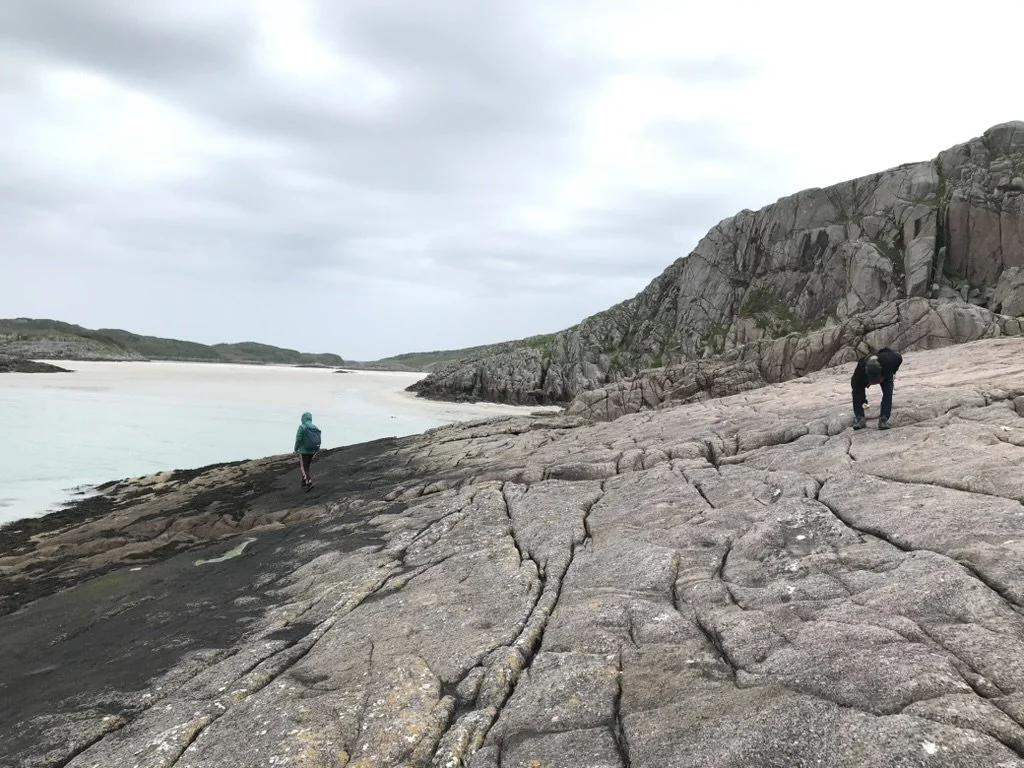
The circumstances were the sea, the wind, a few people, and a few shops.
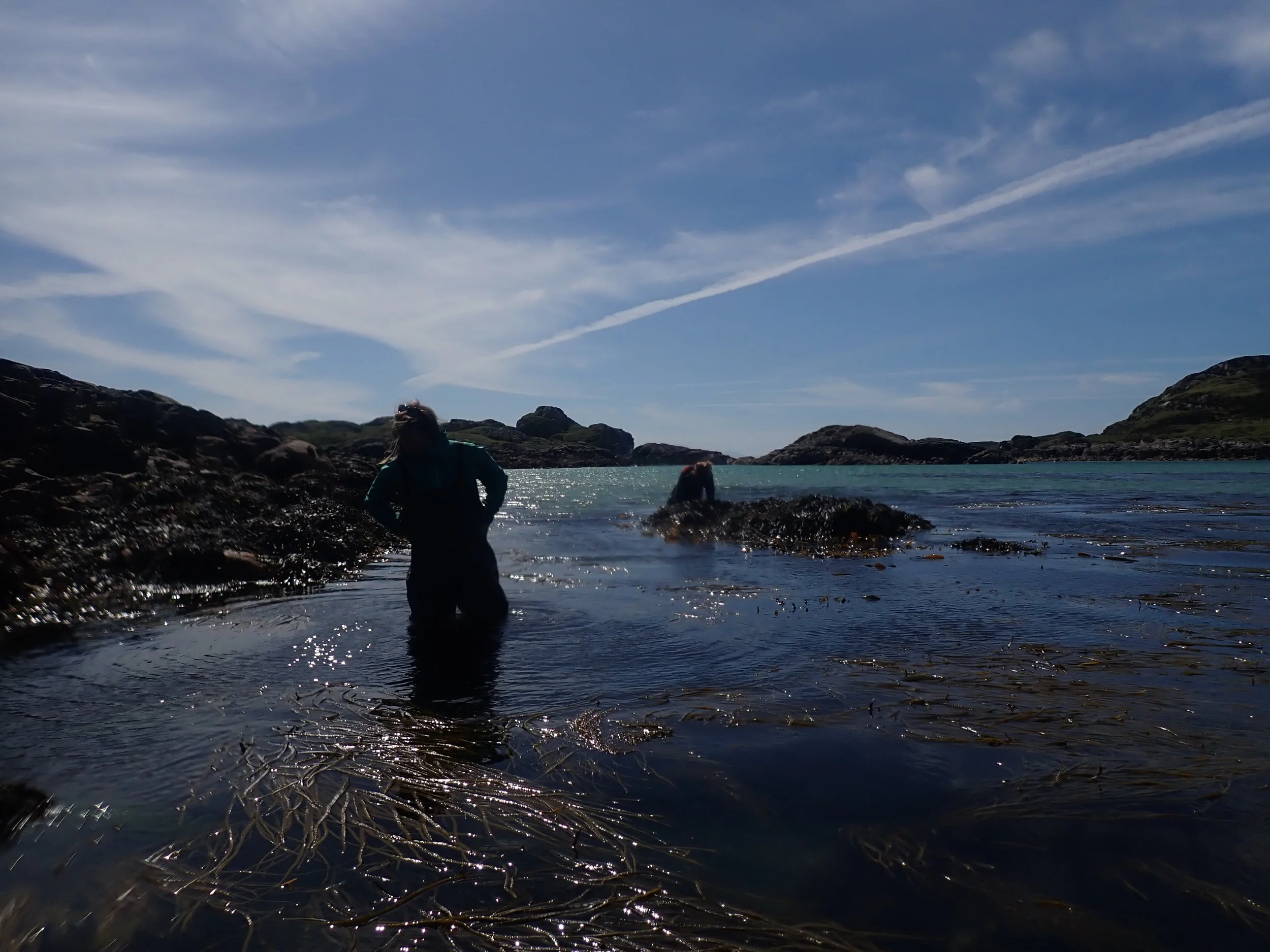
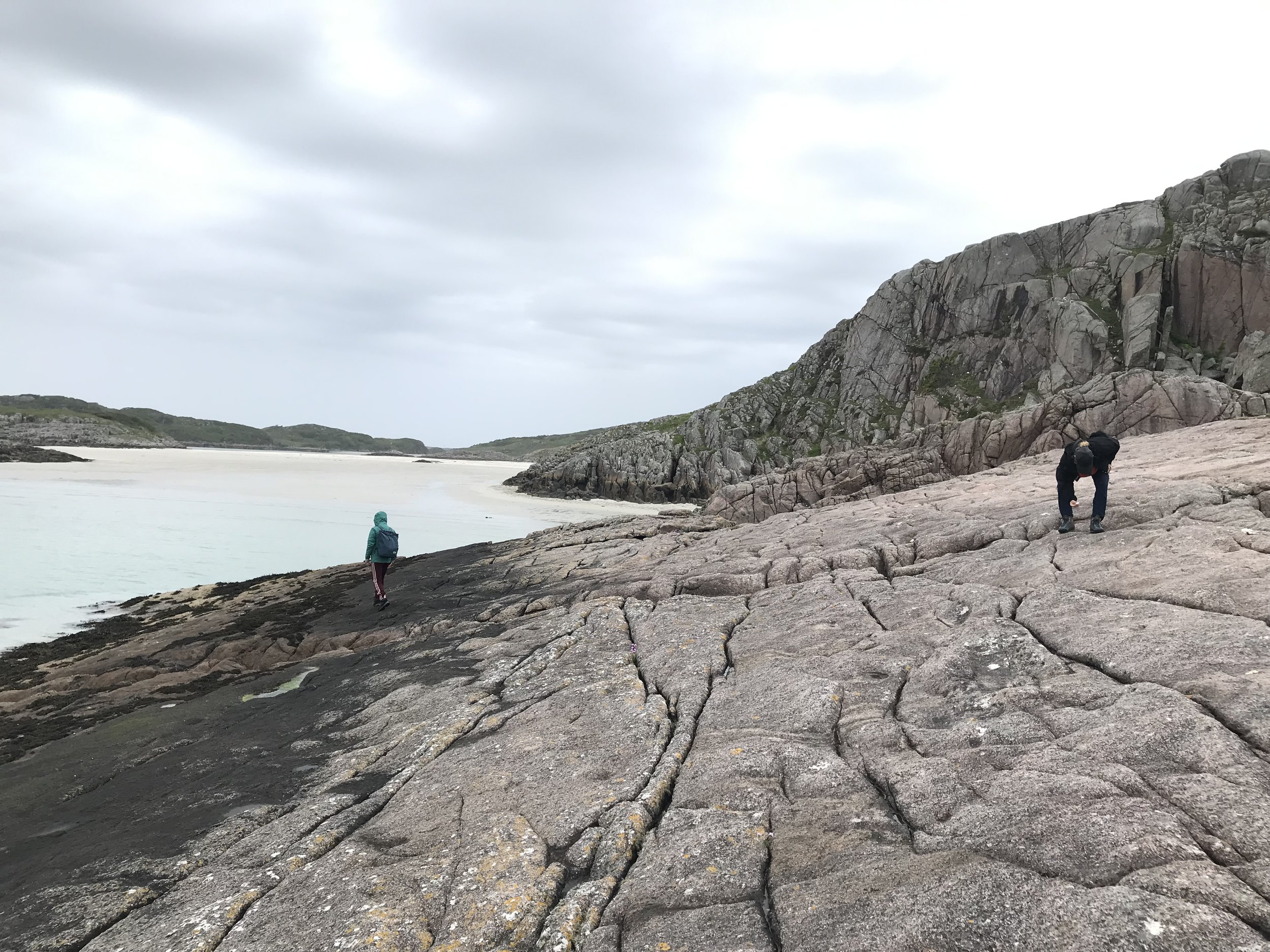
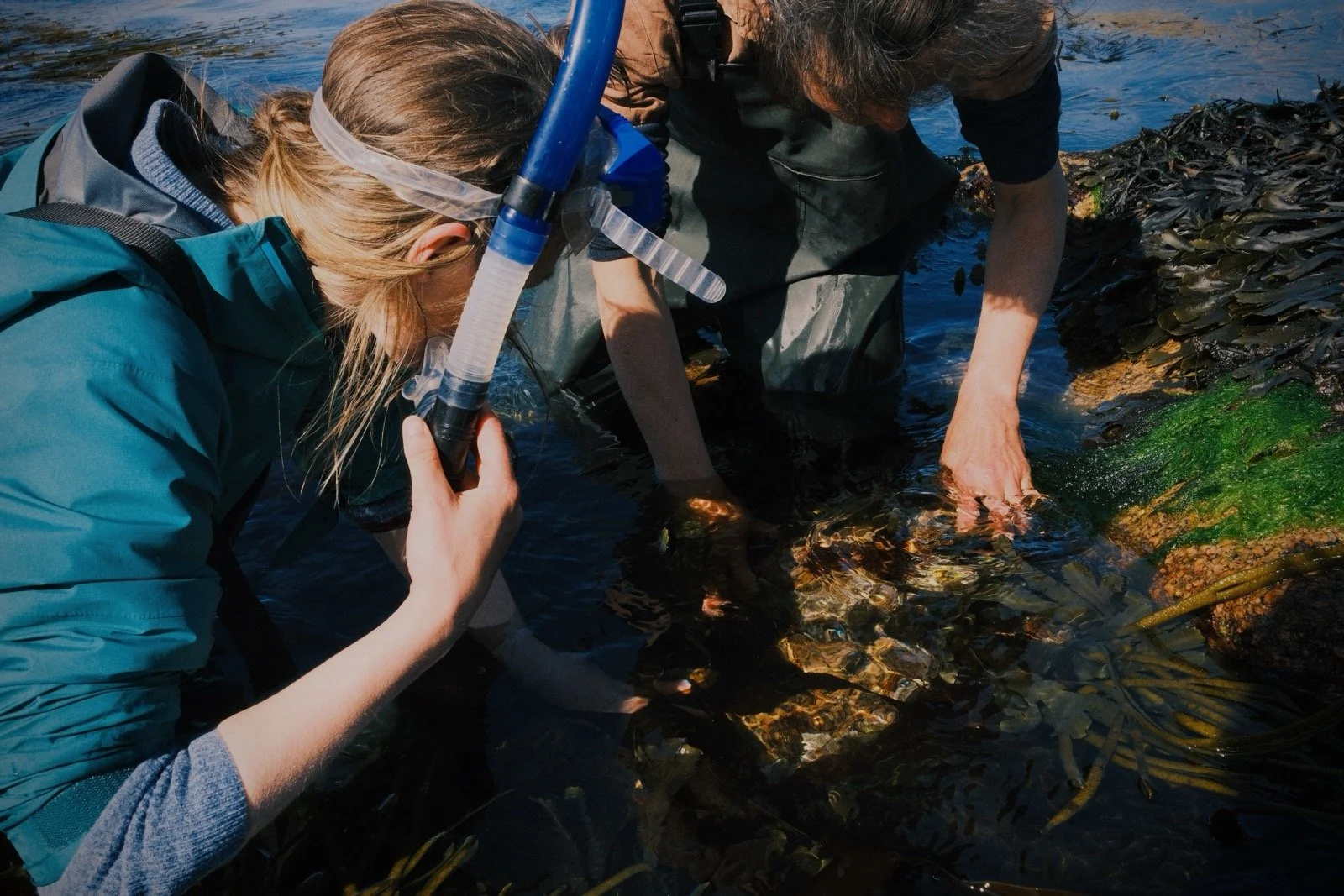
We were standing in the sea with Miek, wearing waders, looking at the seaweed in the water. The seaweed had changed her, she told us, which we understood immediately once we’d spent some time with these wezens (creatures).
‘Creatures’ is the word Miek used to write about these life forms, and because her language is the result of paying very close attention – the result of spending a great deal of time with these creatures – it seemed fitting to us to use her words.
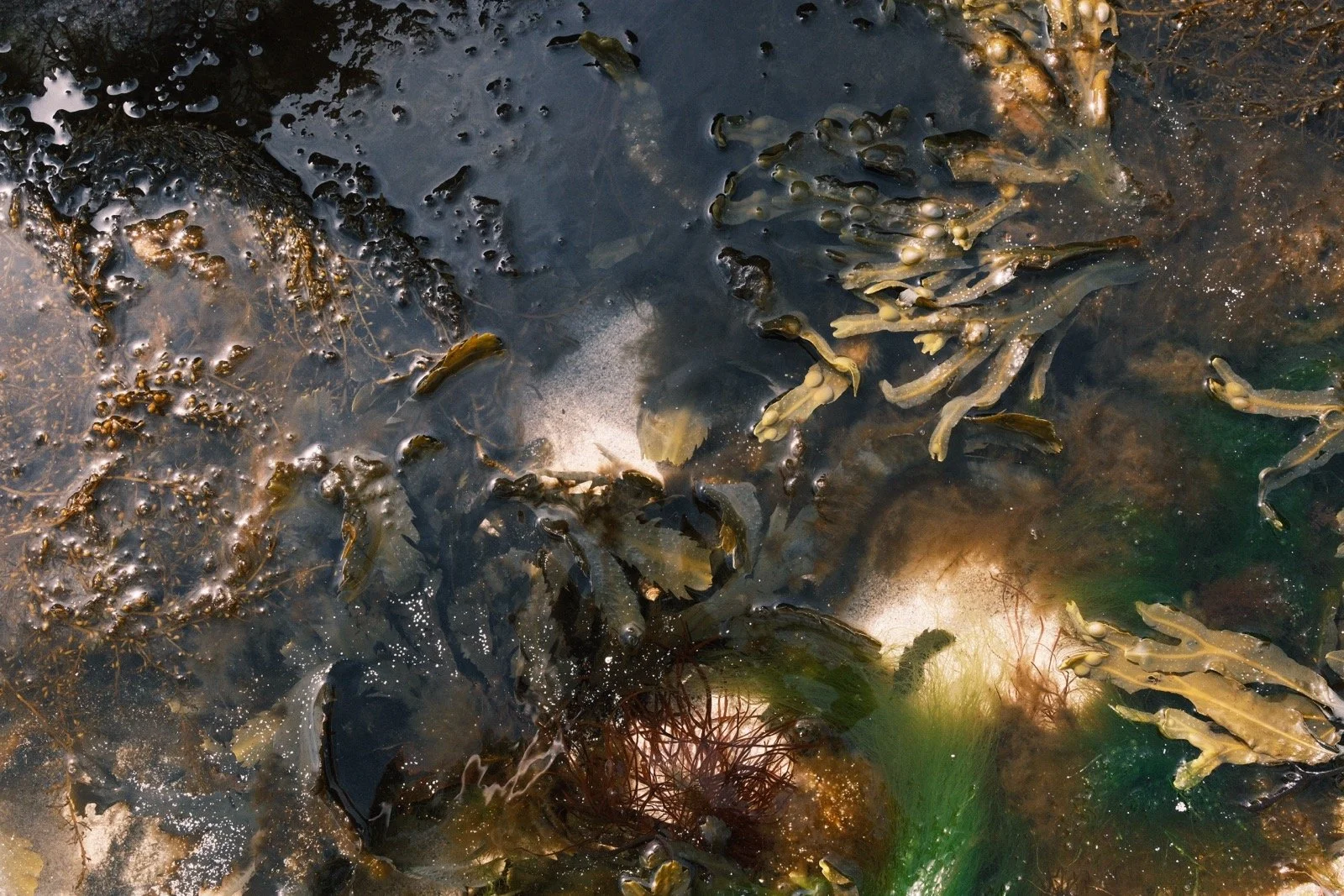
We had to finish a few things, things that had come about in a different time zone. Anoek completed the book she’d been working on for some time: a book version of the performance *Beste Mensen* that we created with Bureau Vergezicht. Marjan Minnesma passed away during our stay. Somewhere in a little green gully, between two rocky hills where an old oak tree lives and dies at the same time, where new trees are growing and moss that has lived there for generations, we had created a small memorial for her.
Through the eyes of Miek and Rutger, we were able to join them as they walked and waded through the countryside and the sea, with which they feel such a deep connection. This way of being allowed to look in, of naar buiten gaan (going out), as Miek calls it, has completely transformed the concept for our next performance.
This performance takes place at Naturalis and centres on the biodiversity crisis. And although we initially described the performance on paper as an ode to nature, our conversations with Miek and Rutger – and spending time with them in the open – led us to redefine the performance’s purpose. Rather than an ode to nature, we now seek to find an answer to the question of how we, as humans, can function within our ecosystem, rather than outside it. This requires, first and foremost, an acknowledgement of the fact that humans have lived within the ecosystem for thousands of years and have also shaped it. Separating nature and humanity – as a pair of concepts, and consequently also in the way we think about our place on this planet – is counterproductive if we wish to find an answer to the question of how we are to function within our ecosystem.
Perhaps all the crises we are currently facing – from the nitrogen crisis to the climate crisis – can be traced back to that fundamental mistake: that we have come to live outside our ecosystem.
Without Miek and Rutger, whose way of living in and with the landscape meant we could never have got so close to it. They made us part of the landscape, and we were much closer to it than if we’d gone on our own.
In that sense, it is strange that concepts such as nature and culture are so separate, because by living within their microculture for a while, we realised that you need culture – ancestors, as it were – to become part of that intimacy.
Being there actually changed everything. We said to one another: if the current arts strategy is about the climate crisis, then the next one must be about the living world. (For want of a better word, we used the term that thinkers such as Naomi Klein and George Monbiot use to refer to ‘nature’. New words that refer to ‘the living world’, as opposed to the lifeless one. Naomi Klein’s new book is called *End-Time Fascism, and the Fight for the Living World*.)
Just before we left, we received an envelope from Miek and Rutger asking if we could post this in the Netherlands, as posting things is a bit of a faff from here. It was an envelope for an activist forest ranger in Sittard. The envelope had clearly been put together with great care. They began to tell us about this forester, about the work he’d done in the 1970s, 1980s and 1990s, and how he’d now fought on until he was weary and disheartened.
We suggested that perhaps we should take the envelope to him ourselves, that it might be a good idea for us to meet up.
‘That would be brilliant!’ Miek exclaimed.
That envelope was perhaps the most apt metaphor for what happened during our stay in Knockvologan. It was as if we’d gone home with a carefully entrusted task, but didn’t yet know exactly what was inside the envelope. It’s something important. That much is certain.